When most people think about improving their smile, teeth whitening or veneers probably come to mind first. But there’s another option that’s been gaining popularity in dental offices across Westminster and Denver: Botox. At Bertagnolli Dental, we’ve seen firsthand how this versatile treatment can transform not just the appearance of your smile, but how you feel about showing it off.
Botox isn’t just for forehead wrinkles anymore. Dentists are uniquely qualified to administer Botox because we spend years studying facial anatomy, oral muscles, and how everything works together when you smile, talk, and chew. That deep understanding makes dental offices an ideal setting for Botox treatments focused on smile enhancement.
Whether you’re bothered by a gummy smile, downturned mouth corners, or those persistent lip lines that seem to deepen every year, Botox treatments can offer a surprisingly effective solution. Let’s walk through exactly how this works and what you can expect.
Key Takeaways
- Botox treatments can enhance your smile by addressing gummy smiles, downturned mouth corners, and lip lines without surgery.
- Dentists are uniquely qualified to administer Botox due to their extensive training in facial anatomy and oral muscles.
- Results from Botox typically appear within one to two weeks and last three to four months, making it a low-commitment option.
- Botox works by temporarily relaxing overactive facial muscles, creating a more balanced and natural-looking smile.
- Treatment sessions take only 15 to 20 minutes with minimal discomfort and no downtime required.
- Botox can complement other cosmetic dental treatments like veneers and teeth whitening for comprehensive smile enhancement.
Understanding How Botox Works on Facial Muscles
Botox is a purified protein derived from botulinum toxin, and while that might sound intimidating, it’s been safely used in medical and cosmetic applications for decades. Here’s the basic science: when injected into specific muscles, Botox temporarily blocks the nerve signals that tell those muscles to contract.
Think of it like putting certain muscles on a brief vacation. They’re still there, still functional, but they’re not working quite as hard. This temporary relaxation is what creates the smoothing effect on wrinkles and allows for precise control over facial expressions.
For smile enhancement specifically, we target muscles around the mouth, lips, and sometimes the jaw. Your smile involves dozens of muscles working in coordination, and sometimes one or two of them are working a little too enthusiastically. Maybe your upper lip pulls up too high, showing more gum than you’d like. Or perhaps the muscles at the corners of your mouth pull downward, making you look tired or unhappy even when you’re not.
By strategically relaxing these overactive muscles, we can help your smile look more balanced and natural. The key word here is “strategic.” This isn’t about freezing your face or eliminating expression. It’s about fine-tuning the muscles so your smile looks the way you want it to.
The effects are temporary, typically lasting three to four months. For many Westminster residents, this is actually a benefit. It means you can try Botox treatments for smile enhancement without committing to anything permanent. If you love the results, great. If you want to adjust something, we can do that at your next appointment.
Common Smile Concerns Botox Can Address
You might be surprised by how many smile-related issues respond well to Botox. Here are some of the most common concerns we treat:
Gummy Smile Correction
A “gummy smile” happens when your upper lip rises too high when you smile, exposing more of your gum tissue than you’d prefer. Some people feel self-conscious about this and end up holding back their smiles or covering their mouths when they laugh.
Botox can help by relaxing the muscles responsible for lifting the upper lip. The result? Your lip doesn’t rise quite as high, showing more tooth and less gum. Most patients see a noticeable improvement within a week of treatment, and the effect looks completely natural. You’ll still have a full, genuine smile. It just won’t reveal as much gum tissue.
This is one of the most popular Botox treatments we offer for smile enhancement, and the results consistently make patients happy. Many Westminster residents who’ve felt embarrassed about their gummy smiles for years find that a quick Botox session gives them the confidence to smile freely.
Downturned Corners of the Mouth
Do people ask if you’re upset when you’re actually feeling fine? Downturned mouth corners can create a permanent frown appearance, even when your mood is perfectly good. This happens when the muscles that pull the corners of your mouth downward (called the depressor anguli oris) are stronger or more active than the muscles that lift them.
Botox injections into these depressor muscles allow the corners of your mouth to lift naturally. You won’t look like you’re forcing a smile. Instead, your resting face simply appears more neutral or pleasant. It’s a subtle change that can make a significant difference in how others perceive you and how you feel when you catch a glimpse of yourself in the mirror.
Lip Lines and Wrinkles
Those vertical lines that form around your lips, sometimes called “smoker’s lines” (though you don’t have to smoke to get them), develop from years of repetitive muscle movements. Every time you purse your lips, sip through a straw, or make certain expressions, these muscles contract. Over time, the skin creases.
Botox can soften the appearance of these lines by relaxing the orbicularis oris muscle that circles your mouth. The treatment won’t eliminate your ability to pucker or kiss. It just tones down the intensity of muscle contractions enough to smooth out the skin. Many patients combine this with other cosmetic dentistry options for comprehensive smile rejuvenation.
What to Expect During Treatment
If you’ve never had Botox before, you’re probably wondering what the actual appointment looks like. Good news: it’s quick, straightforward, and most people find it much easier than they anticipated.
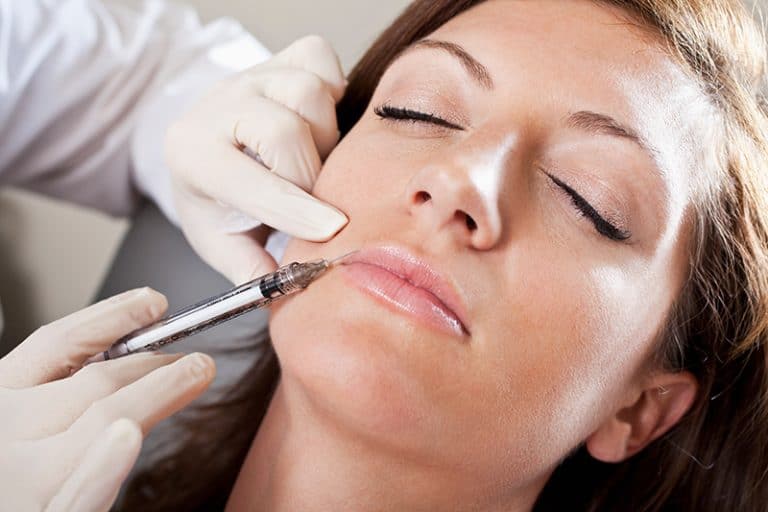
A typical Botox session for smile enhancement takes about 15 to 20 minutes. That includes time for us to discuss your goals, mark the injection sites, and perform the treatment itself. The injections use very fine needles, and most patients describe the sensation as a small pinch. Some areas might be slightly more sensitive than others, but overall, discomfort is minimal.
We don’t use general anesthesia for Botox treatments. In fact, you don’t need any numbing at all in most cases. Some patients prefer a topical numbing cream for comfort, and that’s completely fine. The choice is yours.
There’s no real downtime after treatment. You can drive yourself home, go back to work, or continue with your normal activities. We do recommend avoiding strenuous exercise for 24 hours and not rubbing the treated areas, as this can cause the Botox to migrate to unintended muscles.
You won’t see results immediately. The Botox needs time to take effect. Most patients start noticing changes within three to five days, with full results visible after about one to two weeks. This gradual onset means the changes look natural rather than sudden.
Some patients experience mild bruising or swelling at injection sites. This is normal and typically resolves within a few days. Applying a cold compress can help. Serious side effects are rare when Botox is administered by a trained professional who understands facial anatomy, which is another reason why dental offices are a great choice for these treatments.
Results, Longevity, and Maintenance
So how long do Botox results actually last? For most people, you can expect the effects to hold for three to four months. Some patients find their results last a bit longer with repeated treatments, as the targeted muscles may become trained to relax over time.
Here’s what the timeline typically looks like:
- Days 1-3: No visible changes yet. The Botox is beginning to work at the nerve-muscle junction.
- Days 3-7: You’ll start to notice subtle improvements. Muscles begin to relax.
- Weeks 1-2: Full results become visible. This is when you’ll see the most dramatic difference.
- Months 1-3: Results remain stable and consistent.
- Month 4: Effects begin to gradually wear off as nerve function returns.
Maintenance is straightforward. When you notice the effects starting to fade, schedule your next appointment. Many of our Westminster patients set up regular appointments every three to four months to maintain their results consistently.
One thing worth mentioning: the more consistently you maintain your Botox treatments, the better your results tend to be over time. The muscles adapt to their relaxed state, and some patients find they can eventually extend the time between appointments.
We also adjust dosing based on your individual response. Everyone’s muscle strength and activity patterns are different. After your first treatment, we can fine-tune the amount and placement of Botox to optimize your results.
Botox vs. Other Smile Enhancement Options
Botox is just one tool in the smile enhancement toolkit. How does it compare to other options?
Botox vs. Dermal Fillers
People often confuse these two treatments, but they work differently. Botox relaxes muscles to reduce dynamic wrinkles (the ones that appear when you move your face). Dermal fillers add volume to fill in static wrinkles and lines or plump areas like lips. For comprehensive smile enhancement, many patients benefit from both. At Bertagnolli Dental, we can discuss whether fillers might complement your Botox treatment.
Botox vs. Lip Lift Surgery
For severe gummy smiles or significantly downturned mouth corners, surgical options exist. A lip lift permanently alters the position of your lip by removing a small amount of skin. It’s more invasive than Botox and involves a longer recovery, but results are permanent.
Botox offers a non-surgical alternative with no downtime and temporary results. Many patients prefer to try Botox first to see if they like the effect before considering anything permanent.
Botox vs. Porcelain Veneers
Veneers address the teeth themselves, while Botox addresses the muscles and soft tissue around them. These treatments actually work beautifully together. If you have veneers to perfect your teeth but feel your smile is still off because of muscle issues, Botox can help. Or if you’re considering veneers, Botox might enhance the overall result by improving how your lips frame your new teeth.
Botox vs. Teeth Whitening
Teeth whitening brightens your tooth color, while Botox addresses the shape and movement of your smile. Again, these aren’t competing options. Many patients who come to us for whitening end up adding Botox to their treatment plan once they see how the two complement each other.
The bottom line is that Botox fills a unique role. It’s the only non-surgical option that specifically addresses muscle activity affecting your smile.
Is Botox Right for Your Smile Goals?
Botox isn’t the right solution for everyone, but it’s worth considering if any of these apply to you:
- You’re bothered by a gummy smile but don’t want surgery
- The corners of your mouth turn down, making you look unhappy
- You have lip lines or wrinkles around your mouth
- You clench your jaw or grind your teeth (Botox can also help with TMJ symptoms)
- You want to enhance other cosmetic dental work you’ve had done
- You prefer a treatment with no downtime and temporary, reversible results
Botox tends to work best for adults whose facial muscles have become overactive or imbalanced over time. Results vary based on individual muscle strength, skin elasticity, and the specific concern being treated.
It’s worth having a conversation with a dental professional who can evaluate your unique situation. What works for one person might not be the best approach for another. During a consultation, we can assess your smile, discuss your goals, and recommend the most effective treatment plan.
If you’re in the Denver area and curious about how Botox might help your smile, it’s worth exploring. The treatment is low-risk, temporary, and can provide results that make a real difference in how you feel about your appearance.
Conclusion
Your smile is one of the first things people notice about you. If something about it has been bothering you, whether it’s too much gum showing, downturned corners, or lines around your lips, Botox treatments offer a practical, non-invasive solution worth considering.
At Bertagnolli Dental, we’ve helped Westminster and Denver residents transform their smiles through a range of cosmetic services, and Botox has become an increasingly popular option. Our team understands the detailed anatomy of your face and mouth, which means we can deliver natural-looking results tailored to your specific goals.
Ready to learn more about how Botox treatments can enhance your smile? We’re here to answer your questions and help you decide if this approach makes sense for you. Contact Bertagnolli Dental today to schedule a consultation. We look forward to helping you smile with confidence.
Frequently Asked Questions
How can Botox treatments enhance your smile?
Botox treatments enhance your smile by relaxing overactive facial muscles around the mouth and lips. This can correct gummy smiles, lift downturned mouth corners, and soften lip lines. The result is a more balanced, natural-looking smile without surgery or permanent changes.
How long do Botox results last for smile enhancement?
Botox results for smile enhancement typically last three to four months. Full effects become visible within one to two weeks after treatment. With consistent maintenance, some patients find results last longer as targeted muscles become trained to relax over time.
Can Botox fix a gummy smile without surgery?
Yes, Botox can effectively correct a gummy smile without surgery. By relaxing the muscles that lift the upper lip too high, Botox reduces visible gum tissue when you smile. Results appear within a week and look completely natural while maintaining your genuine expression.
Is it safe to get Botox at a dental office?
Yes, dental offices are ideal for Botox treatments. Dentists spend years studying facial anatomy, oral muscles, and how they work together during smiling and speaking. This expertise allows them to deliver precise, natural-looking results with minimal risk of complications.
What’s the difference between Botox and dermal fillers for smile enhancement?
Botox relaxes muscles to reduce dynamic wrinkles that appear with facial movement, while dermal fillers add volume to fill static lines or plump lips. Many patients benefit from combining both treatments for comprehensive smile rejuvenation and optimal results.
How much downtime is needed after Botox for smile enhancement?
There’s virtually no downtime after Botox treatment. You can return to work and normal activities immediately. Simply avoid strenuous exercise for 24 hours and don’t rub treated areas. Minor bruising or swelling may occur but typically resolves within a few days.