There’s a reason we say “nothing beats your natural teeth.” Even though remarkable advances in dental implants and prosthetics, your original teeth remain the gold standard for chewing, speaking, and maintaining your jawbone health. That’s why root canal therapy matters, it’s often the last line of defense between keeping your natural tooth and losing it forever.
At Bertagnolli Dental in Westminster, Colorado, we’ve helped thousands of patients preserve their smiles through root canal treatment. And here’s what surprises most people: modern root canal therapy is nothing like its outdated reputation. It’s a straightforward procedure that relieves pain rather than causes it, and it gives infected teeth a second chance.
In this guide, we’ll walk you through everything you need to know about how root canal therapy works, why it’s necessary, and what makes saving your natural tooth such a worthwhile investment in your long-term dental health.
Understanding the Anatomy of Your Tooth
Before we jump into root canal treatment itself, it helps to understand what’s actually inside your tooth. Most people think of teeth as solid, bone-like structures, but they’re far more complex than that.
Each tooth has several distinct layers. The outermost layer is enamel, that hard white coating you see when you smile. It’s the hardest substance in your entire body, tougher than bone. Beneath the enamel sits dentin, a yellowish layer that makes up most of the tooth’s structure. Dentin is softer than enamel and contains microscopic tubes that can transmit sensations, which is why you feel sensitivity when enamel wears away.
But here’s where things get interesting. At the very center of your tooth lies the pulp chamber, and this is where root canal therapy comes into play. The pulp is living tissue containing blood vessels, nerves, and connective tissue. It extends from the crown of your tooth down through narrow channels called root canals, all the way to the tip of each root.
During tooth development, the pulp plays a crucial role, it nourishes the tooth and helps it grow. But, once your tooth is fully mature, it can actually survive without the pulp. The surrounding tissues continue to provide nourishment through the root.
This is exactly why root canal therapy works. We can remove damaged or infected pulp tissue while preserving the tooth’s structural integrity. The tooth remains functional, anchored in your jaw, doing its job just like before.
What Causes Tooth Pulp Damage
The pulp inside your tooth is well-protected, but it isn’t invincible. Several situations can compromise this inner tissue, leading to infection or inflammation that requires root canal treatment.
Deep decay is the most common culprit. When cavities go untreated, bacteria gradually work their way through the enamel and dentin until they reach the pulp chamber. Once bacteria invade this space, infection sets in quickly.
Trauma to the tooth can also damage the pulp, even if you don’t see visible cracks or chips. A hard blow to the mouth, from sports, an accident, or a fall, can sever the blood supply to the pulp or cause internal damage that leads to slow degeneration over time. Sometimes the effects don’t show up for years.
Large fillings present another risk factor. When a tooth requires extensive restoration, the remaining structure becomes thinner, and the pulp sits closer to the surface. Repeated dental work on the same tooth can irritate the pulp enough to cause irreversible damage.
Cracked or chipped teeth create pathways for bacteria to enter. Even hairline cracks that you can’t see with the naked eye can allow bacteria to infiltrate the pulp chamber.
Here’s what happens when pulp damage goes untreated: the infected tissue begins to break down, and bacteria multiply within the pulp chamber. This can lead to an abscess, a pocket of pus that forms at the root tip. Abscesses are serious. They cause significant pain and swelling, and if left alone, they can damage the surrounding jawbone. The infection can even spread to other areas of your head and neck.
Root canal treatment stops this progression in its tracks, eliminating the infection and preventing further complications.
Signs You May Need a Root Canal
How do you know if you need root canal therapy? Your tooth will usually give you some warning signs, though not always. Some infections develop silently, which is why regular dental checkups matter so much.
That said, here are the symptoms we most commonly see:
- Persistent pain that doesn’t go away, especially when chewing or applying pressure to the tooth
- Prolonged sensitivity to hot or cold temperatures that lingers long after the stimulus is removed
- Darkening or discoloration of the tooth, which can indicate pulp damage
- Swollen, tender gums near the affected tooth
- A small bump on the gums resembling a pimple (this is often a draining abscess)
- Tooth mobility, the tooth feels loose when it shouldn’t
Some patients experience sharp, throbbing pain that wakes them up at night. Others notice only mild discomfort that comes and goes. And occasionally? No symptoms at all. We sometimes discover pulp problems during routine X-rays when patients come in for regular cleanings.
If you’re experiencing any of these warning signs, don’t wait. The sooner we address the problem, the better your chances of saving the tooth. At Bertagnolli Dental, we’ve seen what happens when patients delay treatment, what starts as a treatable infection can escalate into a dental emergency requiring extraction.
The bottom line: tooth pain isn’t normal. If something feels off, trust your instincts and schedule an appointment.
The Root Canal Procedure Explained
We understand that “root canal” can sound intimidating. But modern root canal therapy is a routine procedure that typically takes one to two appointments, and most patients are surprised by how comfortable the experience actually is.
Preparing for Treatment
Before your procedure, we’ll take detailed X-rays to assess the shape of your root canals and check for signs of infection in the surrounding bone. This imaging helps us plan the most effective treatment approach.
If you have an active infection, we may prescribe antibiotics beforehand to help control it. We’ll also discuss your medical history and any medications you’re taking.
For patients with dental anxiety or those who have difficulty keeping their mouth open for extended periods, we offer sedation dentistry options. You deserve to feel comfortable throughout your treatment, and sedation can make the experience much easier.
What Happens During the Procedure
On the day of your root canal, here’s what to expect:
First, we’ll administer local anesthesia to completely numb the area around the affected tooth. You shouldn’t feel pain during the procedure, just some pressure and vibration.
Next, we place a small rubber sheet called a dental dam around the tooth. This keeps the area dry and prevents bacteria from your saliva from entering the cleaned canals.
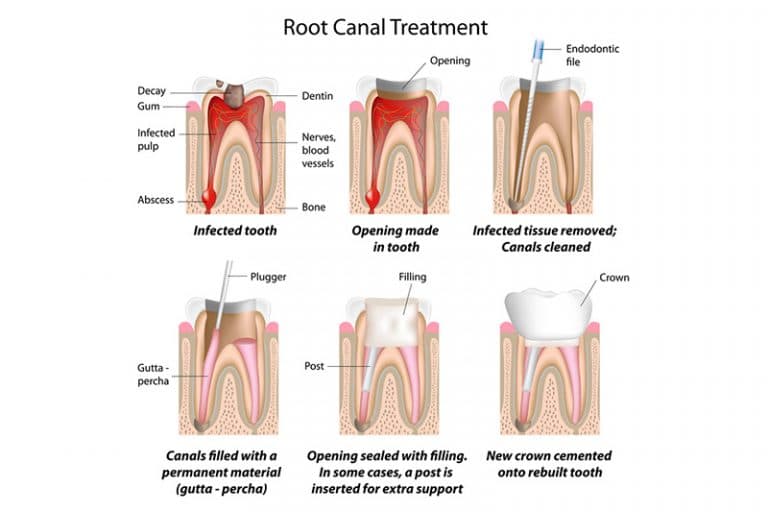
We then create a small opening in the crown of your tooth to access the pulp chamber. Using specialized instruments, we carefully remove the infected or damaged pulp tissue from both the chamber and the root canals. The canals are cleaned, shaped, and disinfected thoroughly.
Once the canals are clean, we fill them with a biocompatible material called gutta-percha and seal the opening with a temporary or permanent filling.
In most cases, we’ll recommend placing a dental crown on the treated tooth afterward. Since the tooth no longer has living tissue inside, it can become more brittle over time. A crown protects the tooth and restores its full function.
The entire process usually takes 60 to 90 minutes, depending on the complexity of the tooth’s root system. Molars, with their multiple roots, typically take longer than front teeth.
Benefits of Saving Your Natural Tooth
So why go through root canal therapy instead of simply extracting the tooth? Here’s the thing, your natural teeth offer advantages that no replacement can fully match.
Efficient chewing. Natural teeth are designed to work together. They distribute biting forces evenly and let you eat whatever you want without thinking twice. Implants and bridges function well, but your original equipment is still the benchmark.
Normal appearance and sensation. A treated tooth looks and feels like your other teeth. There’s no adjustment period, no learning curve. It’s still your tooth.
Protection for neighboring teeth. When you lose a tooth, the adjacent teeth can shift into the empty space over time. This affects your bite alignment and can create problems for otherwise healthy teeth. Saving the original tooth prevents this domino effect.
Preservation of jawbone. Your jawbone needs stimulation from tooth roots to maintain its density. When a tooth is extracted, the bone in that area begins to deteriorate. While implants can prevent this, root canal therapy eliminates the need for extraction altogether.
Cost-effectiveness. Root canal therapy with a crown is generally less expensive than extraction followed by an implant or bridge. And the investment pays off for decades, most properly treated teeth last a lifetime.
One-time solution. Unlike bridges or dentures that may need replacement or adjustment over the years, a successfully treated natural tooth with a crown can serve you indefinitely with proper care.
At Bertagnolli Dental, we always explore every option to preserve your natural teeth. Extraction is a last resort, not a first choice. Your smile is worth saving.
Recovery and Aftercare
After your root canal procedure, what should you expect? Most patients return to normal activities the same day or the next morning. The recovery process is typically straightforward.
Immediately after treatment, you’ll experience numbness for a few hours while the anesthesia wears off. We recommend avoiding eating until full sensation returns, you don’t want to accidentally bite your cheek or tongue.
Mild discomfort is normal for the first few days. The area around the treated tooth may feel tender, especially when biting down. Over-the-counter pain relievers like ibuprofen usually manage this effectively. If we prescribe any medications, take them as directed.
Avoid chewing on the treated side until your permanent crown is placed. The temporary filling protects the tooth, but it’s not designed for heavy use. Stick to softer foods and chew on the opposite side when possible.
Most patients feel significantly better within a week. If you experience severe pain, swelling that gets worse, or signs of allergic reaction to any medication, contact us immediately.
Long-term care is simple: treat your restored tooth like any other. Brush twice daily, floss regularly, and keep up with your routine dental checkups. A tooth that’s had root canal therapy can function normally for the rest of your life with proper maintenance.
One important note, don’t skip your crown appointment. The permanent restoration is crucial for protecting your treated tooth from fracture. We’ve seen patients delay this step only to crack the tooth and face extraction anyway. Don’t let that happen to you.
Conclusion
Root canal therapy has earned an undeserved reputation over the years. In reality, it’s one of the most effective tools we have for preserving natural teeth and eliminating dental pain. The procedure itself is comfortable, the recovery is quick, and the results can last a lifetime.
If you’re experiencing tooth pain, sensitivity, or any of the warning signs we’ve discussed, don’t let fear keep you from getting the care you need. Early intervention gives us the best chance of saving your tooth and protecting your overall oral health.
At Bertagnolli Dental in Westminster, Colorado, we’ve helped thousands of patients through root canal treatment, and we’re ready to help you too. Our team combines expertise with compassion, ensuring you feel informed and comfortable every step of the way. We also offer sedation dentistry for patients who need extra support during their procedures.
Your natural teeth are worth fighting for. Call us today to schedule your appointment and take the first step toward lasting dental health and comfort.
